See realistic annual savings and payback period
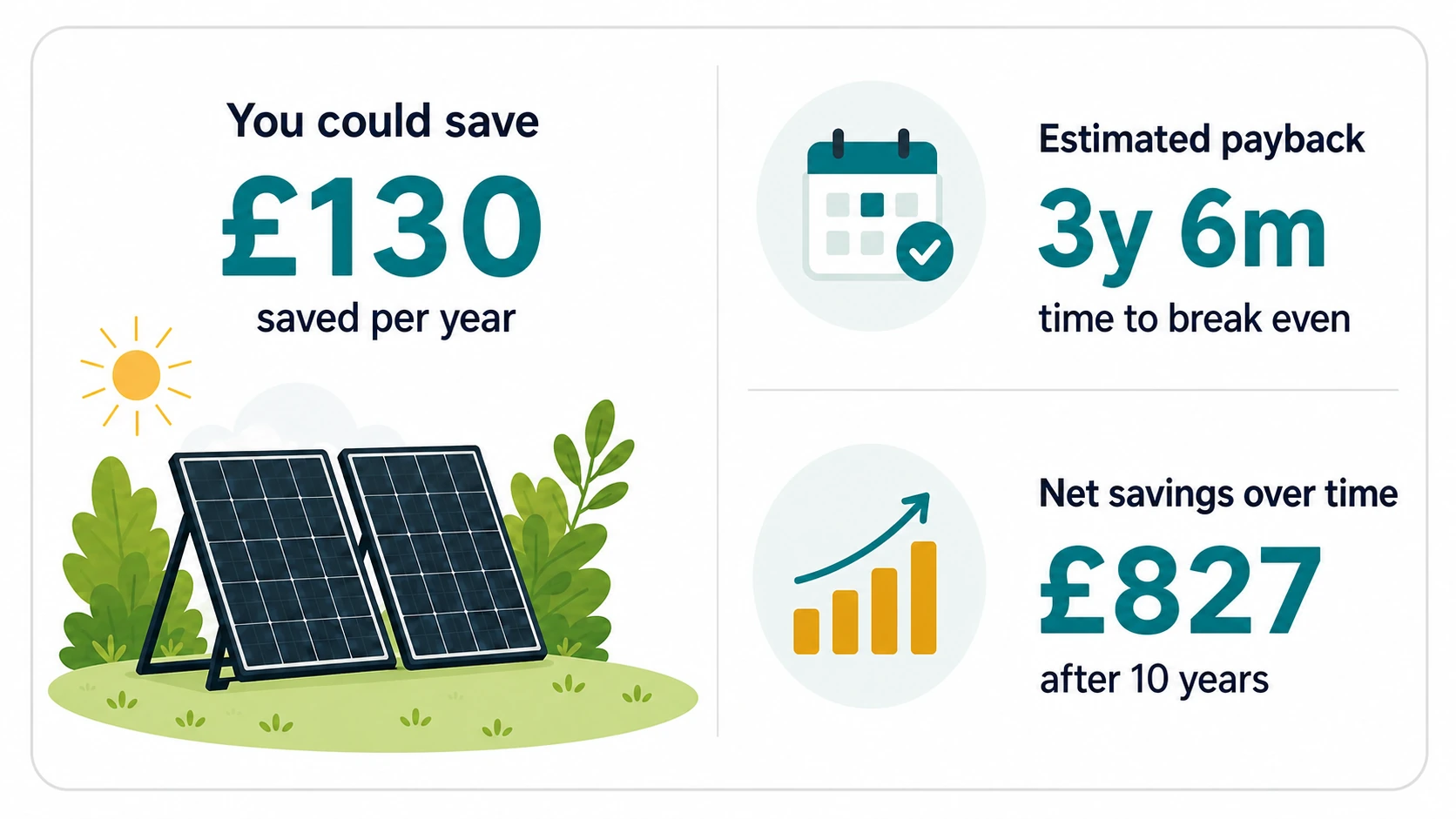
Grounded estimates for annual bill savings, payback and long-term net savings, based on your location, household electricity use and setup.
Now available: Browse 41 plug-in solar kits for sale
Guides, resources and tools to help you understand plug-in solar, estimate realistic generation, savings and payback, and find a kit that meets the UK rules.

Every guide, tool and product listing is built around the official UK plug-in solar rules.
Estimates reflect your postcode, panel setup, electricity use and UK system limits.
Every listed kit must have credible evidence of UK compliance.
Not sure where to begin with plug-in solar? Follow these six steps to estimate your savings, understand the UK rules and get a compliant kit up and running at home.
Use the Left and Right Arrow keys to move between steps.
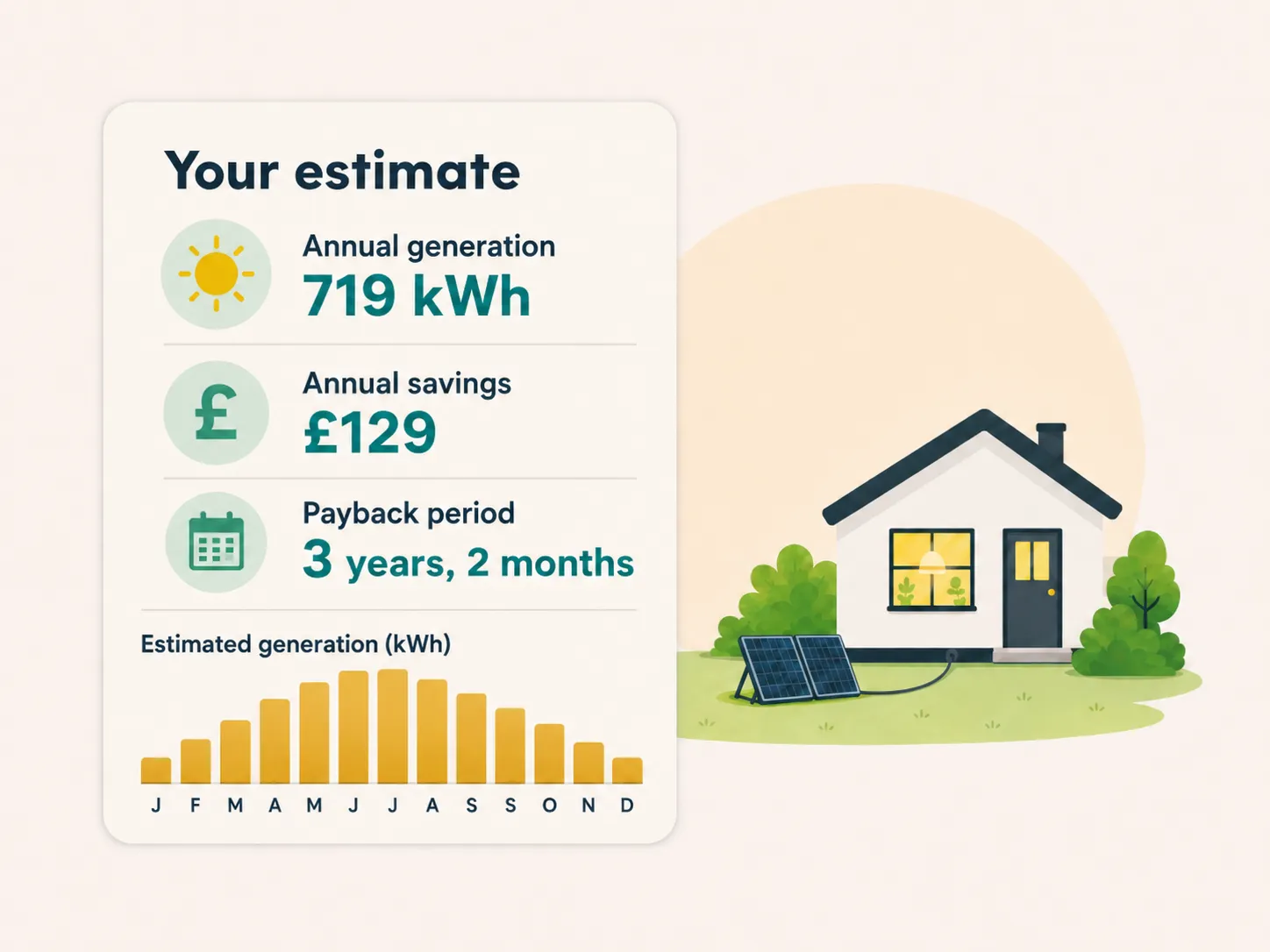
Use our calculator to estimate likely generation, annual savings and payback period for a compliant plug-in solar kit.
Estimate plug-in solar savings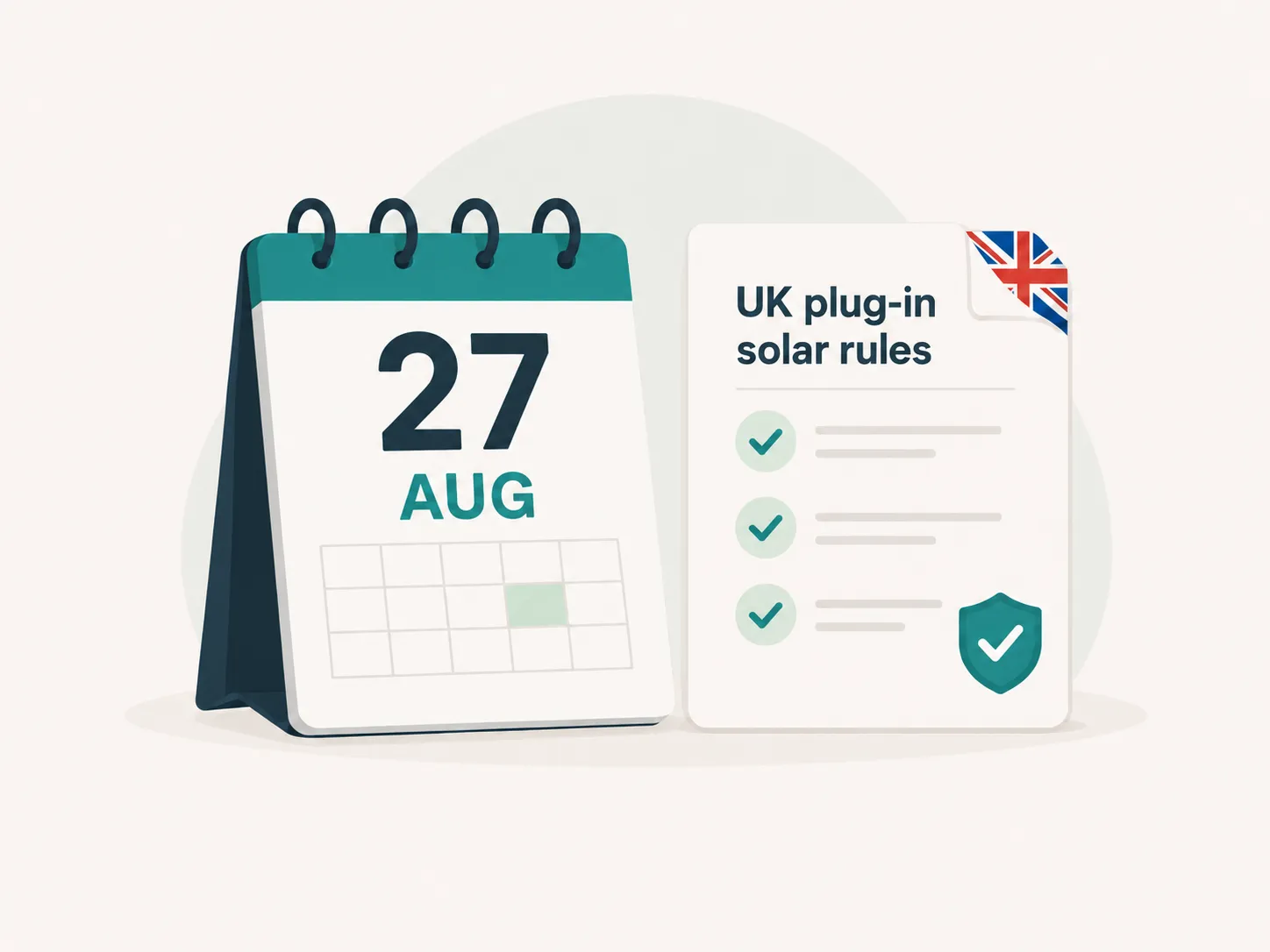
New UK rules came into force on 27 August 2026, creating a safe and legal way to buy and self-install a compliant plug-in solar kit.
Read the UK rules
Compare complete UK-compliant kits and choose one that suits your space, mounting location and budget.
Find a compliant kit
Follow the supplied instructions and place the panels where they’ll get plenty of daylight and generate as much electricity as possible.
Boost solar output
Generated solar electricity enters your home through a standard UK socket, helping to reduce your energy bills for years to come.
Explore potential savings
Register your compliant kit through the ENA myplugin.solar portal no later than 28 days after installation.
Read the registration guideFree plug-in solar calculator
Our free calculator is built specifically around the official UK plug-in solar rules. It models systems with an 800VA output limit, up to four solar panels with a combined capacity of up to 2,000W, and no integrated battery storage.
Enter your postcode, panel setup and a few details about your household and electricity use. The calculator creates a realistic estimate for your home, using postcode-level PVGIS solar data and cautious assumptions.
Grounded estimates for annual bill savings, payback and long-term net savings, based on your location, household electricity use and setup.
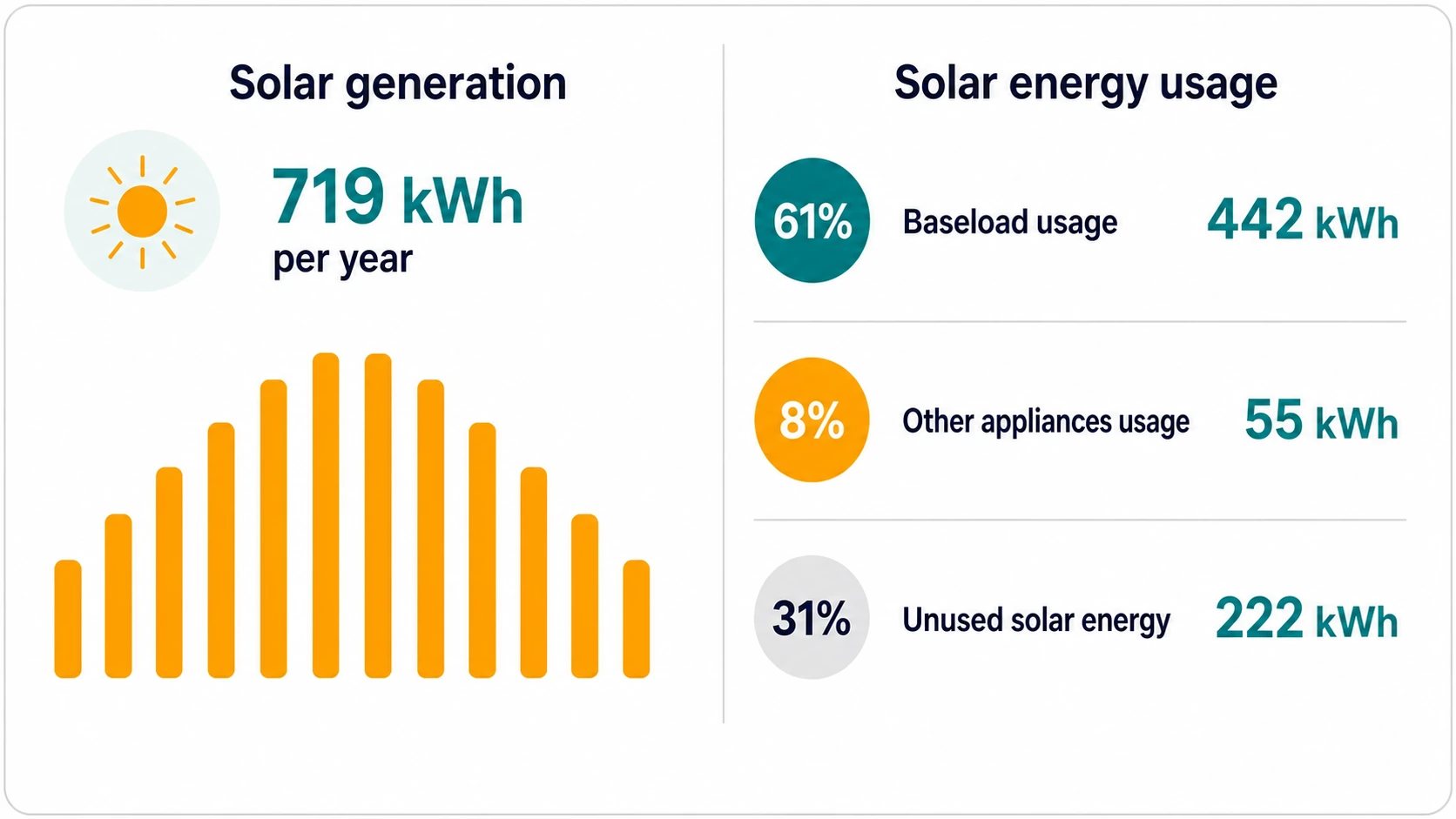
See annual and monthly generation estimates, with a breakdown of how much solar electricity is used at home and how much is exported to the grid.
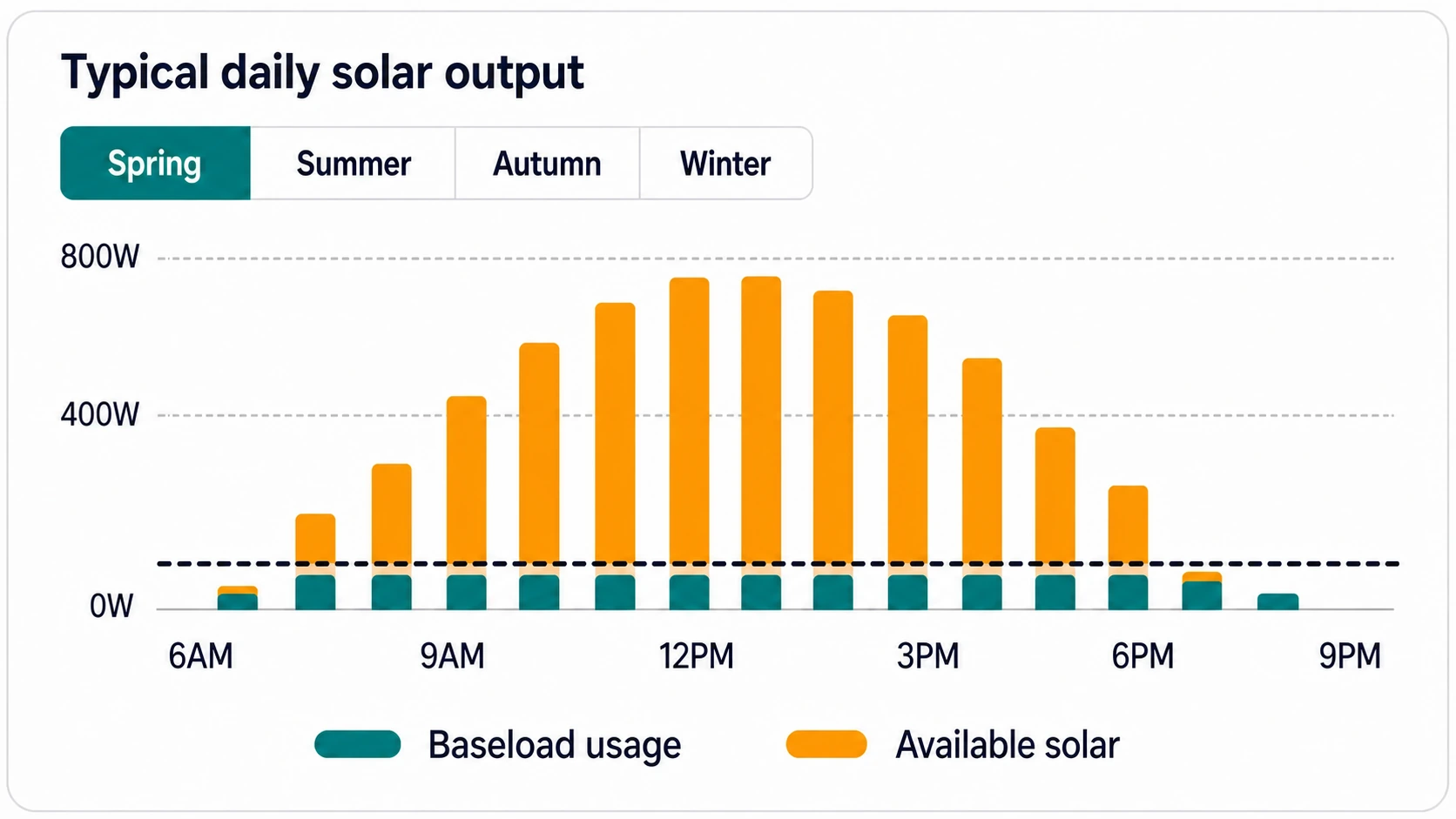
See how solar output changes through the day and across the seasons, including when spare power may be available beyond your baseload electricity use.
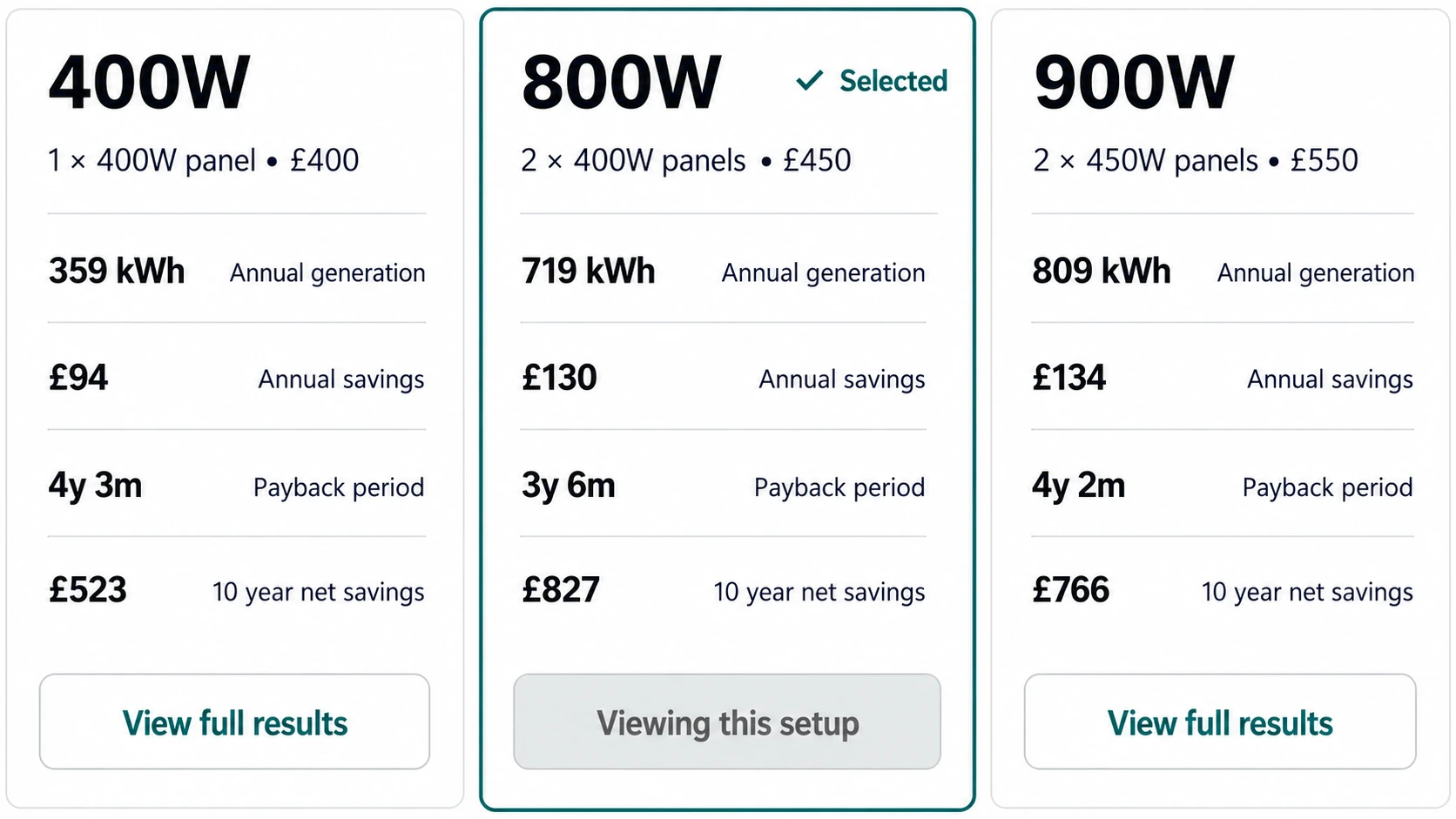
Compare estimated generation, savings and payback across compliant plug-in solar kits from 300W to 1,300W, and see how each system size performs.
Uses postcode-level solar radiation data from the European Commission’s PVGIS 5.3 dataset.
No email or sign-up required. Your estimate is calculated securely in your browser.
Uses cautious real-world assumptions rather than optimistic best-case scenarios.
Official UK rules
The UK government has published new rules for plug-in solar, which came into force on 27 August 2026. Households can now buy complete compliant kits designed to connect safely through a standard UK socket and install them without an electrician.
To use this self-install route, the kit must comply with the new UK requirements and be installed exactly as the manufacturer specifies.
Renting your home?
You should get permission from your landlord or property owner before installing a kit.

Based on the UK Plug-in Solar Device Interim Product Specification, version 2.0 (opens in a new tab).
Plug-in solar products
The UK plug-in solar market is now live. Our product tracker makes it easier to see which compliant kits are available, who sells them, and how prices and specifications compare.
Every product we feature is a complete kit supported by credible UK plug-in solar compliance evidence.
Tips & guides
Practical guides to help you understand plug-in solar generation, setup choices and likely savings.
See modelled UK savings for an 800W plug-in solar kit, including realistic annual savings, payback times and longer-term returns.
Read the savings guideSee how postcode, panel direction, panel angle, shading and real-world placement choices affect annual plug-in solar generation.
Read the generation guideSee what usually comes in a plug-in solar kit, including panels, microinverters, cables, mounting systems and registration information.
Read the equipment guide